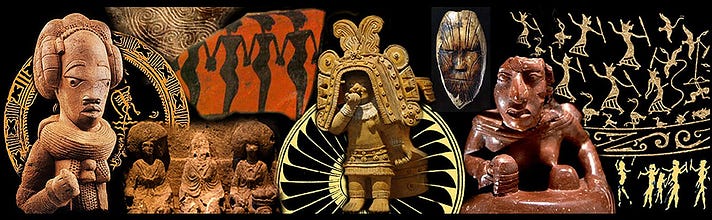
The Ancient Female Icons
Mapping their global reach: a work in progress, 52 years in

I’ve been doing intensive work on reconfiguring the Suppressed Histories website: pages for articles, videos, book excerpts, and site navigation. In this last week I’ve been revising the About page, which includes a section on the Making of the Archives. It’s been a retrospective of event flyers and brochures from 1973 forward, and photos of the 150 slide trays showing titles of the visual talks up to 2000. That is when the tech I was using sunsetted (Kodak actually stopped making slide film) and it was time to go digital. So I learned Powerpoint, started scanning slides, and created many new presentations.
While going over this old material, I came to this map that I made to give a global view of the ancient female figurines. I created the background in 1974, as consultant for Donna Deitch’s documentary Woman to Woman, for a section on women’s history. (She was then at UCLA film school; I met her through Judy Grahn, whose Common Woman poem was being recorded by friends of Donna, the lesbian funk band High Risk, on their 45. So all this came about via the lesbian connection.)
Donna and I went around to university libraries in LA, searching for historic images of women, and taking slides of them, to be filmed later. (I intended to inscribe it with Indigenous place names, but that was a challenging undertaking I didn’t have the resources for.) We printed photos of the ancient figurines, and I got as far as cutting them out, preparing to attach them to the map for filming. That never happened, but Donna gave me copies of the over 300 slides we had shot. (Good thing, too, because her studio later burned down.) They became seedlings of the Suppressed Histories Archives, and shaped my teaching global women’s history through images.
I kept the map for 52 years, through all my moves. Yesterday it came full circle. I spent all day populating the map with digital images for every region for which I have found photos of these statuettes. They are ceramic, stone, bone, and ivory (not just from elephants, but also hippos, walruses or other sea mammals). They are small (the largest one is from Nok in central Nigeria (about 18 inches), and possibly the heavyYemenite figure parked at the lower corner of Arabia.
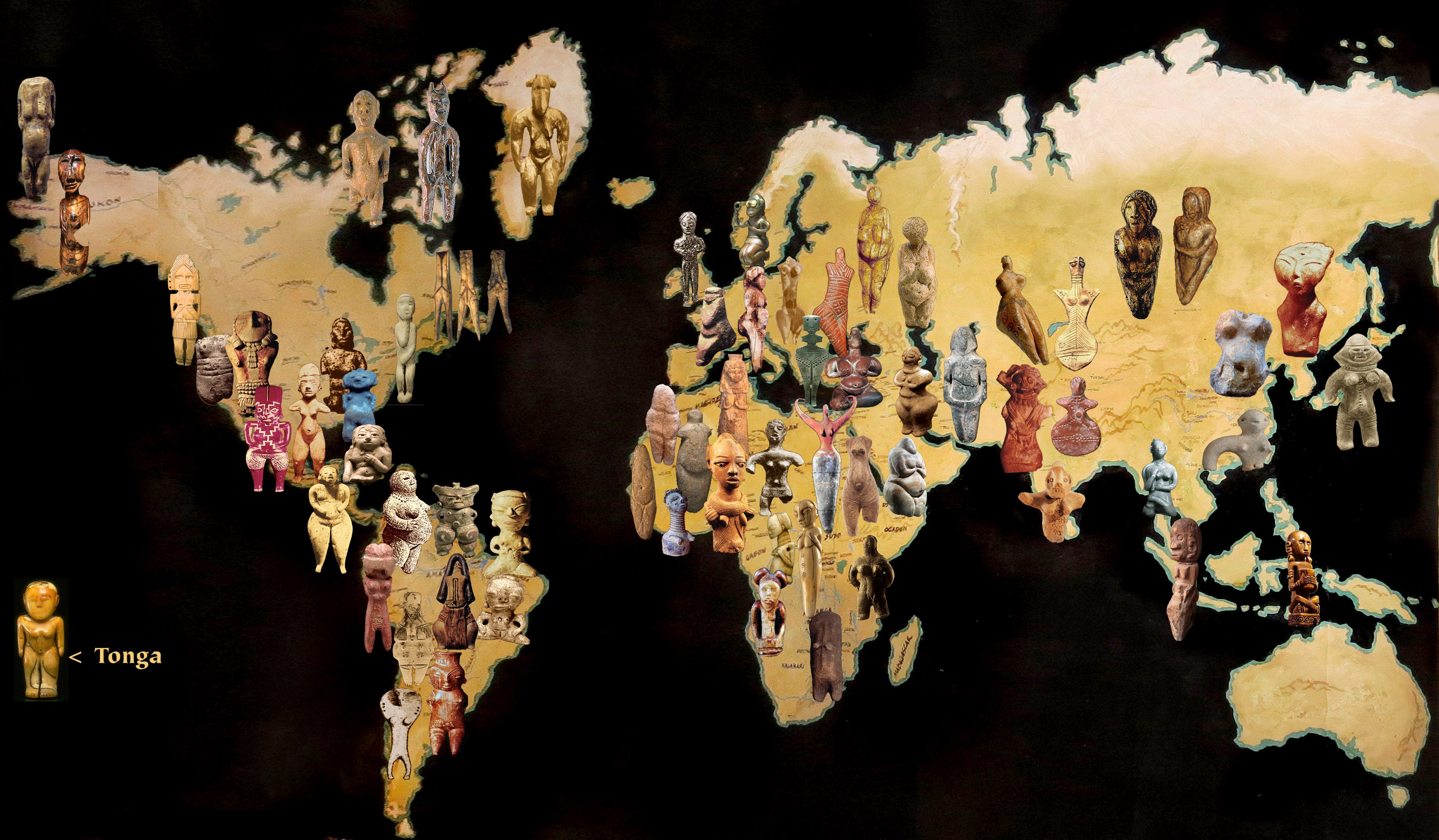
You’ll note that the forests of North America and North Asia are blank, along with Tibet, most of China and SE Asia, and Australia. There might be many reasons for this: no ceramic tradition, or images in unfired clay would dissolve over the ages; that some images were made of perishable organic material such as cloth or reeds would not survive in moist climates. Some cultures honored female ancestors in other forms: breastpots, effigy vessels, or rock paintings and petroglyphs, as in Australia. In some places, especially Africa and the Pacific Islands, people made wooden statues larger than these.
I used the Mercator map (remember, it was 1974!), which distorts the shapes of continents and makes the Northern Hemisphere appear much larger than it is. Northeast Asia is cut off, and Pasifika is mostly off-screen. (I put in a Tongan ivory—she would be much farther west in reality—to represent.) Back in the 70s, I didn’t have her, or the small icons from Senegal and Zimbabwe, or El Salvador and Honduras, or Greenland, or even Ukraine and Bulgaria.
But as we went through hundreds of books and took slides from them, we found the Jomon figurines from Japan, those from Iraq, Egypt, Indus Valley, Mexico, Ecuador, and Colombia. That was where my slidehows started. I how realize I have to go back and look at the digital archives for Spain, and for the Caribbean. I just found an ancient elk antler figurine from the Coast Salish yesterday. So this map is not the final form; it’s always a work in progress.
Nor can a single map reflect the large concentrations of female icons in some regions: in Southwest Asia, the Indus and its foothills, the Nile Valley, the Mediterranean and the Balkans, Mexico, Ecuador, Brazil, Japan, and paleolithic Eurasia. They can’t fit into the available space. Still, an overview of ancient female iconography is necessary, a historical geography that fills glaring gaps in what we are taught, and never shown.
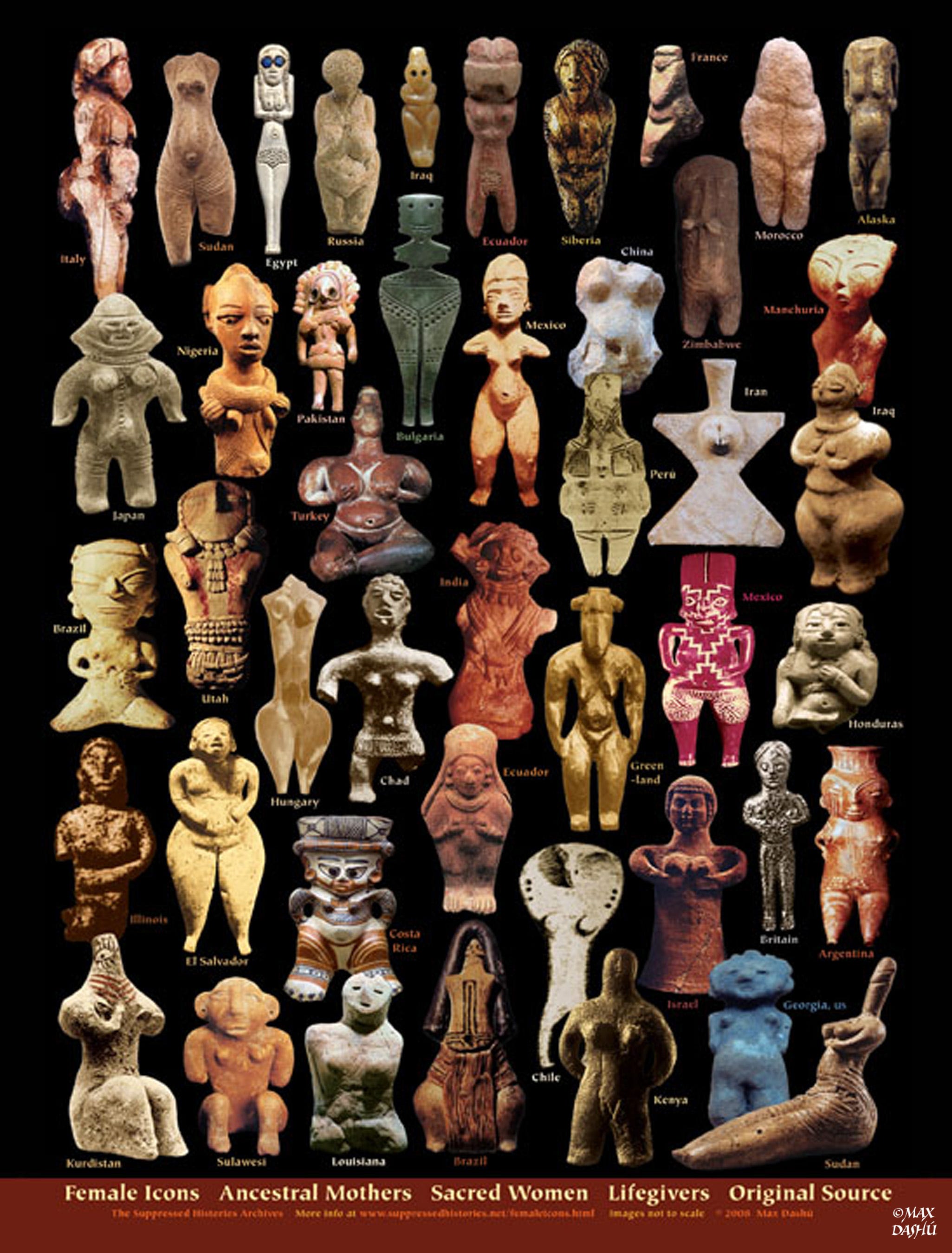
In 2008 I designed the poster Female Icons, Ancestral Mothers, which has gone around the world, and is now in its third printing. Women need to know how international these images are. Shown, from left top: Italy, Sudan, Egypt, Russia, Ecuador, Siberia, France, Morocco, Alaska, Japan, Nigeria, Pakistan, Bulgaria, Mexico, China, Zimbabwe, Manchuria, Iraq, Iran, Peru, Turkey, Brazil, Utah, Hungary, Chad, India, Greenland, Mexico, Honduras, Argentina, Britain, Israel, Chile, Ecuador, Costa Rica, El Salvador, Illinois, Kurdistan, Sulawesi, Louisiana, Brazil, Kenya, Sudan.
More detailed description of each image here, with site names, dates, and other info, along with a few more photos.
My article “They Are Not Venus Figurines” critiques the trivializing and pornifying lens through which the figures have been viewed ever since 1864, when a French marquis called a paleolithic icon found on his estate a "Vénus impudique.” He saw her as “immodest” in contrast to the Roman archetype of Venus Pudica.
This sexualizing lens has predominated ever since, and many (mostly male) academics have insisted that the ancient figurines were pornography, or possibly toys (contradictory claims, neither of which explain why so many of them were placed in burials, or covered with red ochre). But they could not represent anything significant, and definitely nothing sacral! Even though some have been found in shrines, and their placement in burials is suggestive of regenerative power. (I go into these interpretativ issues, and the Eurocentrism of the “Venus” naming, in the article linked above.)
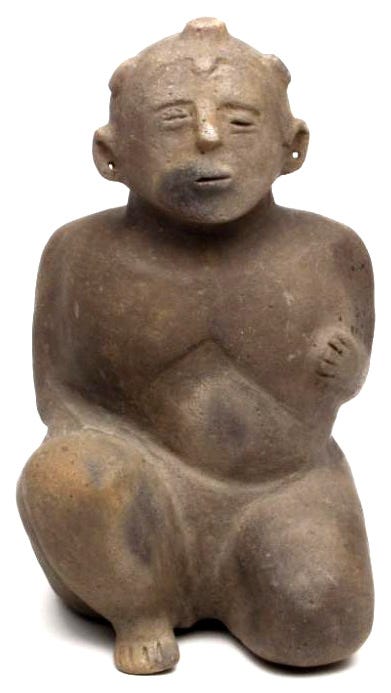
Anyway, these female figures are a recurring pattern across countless cultures, along with others that I visually document in my poster series. It includes Sacra Vulva, Vulva Stones (petroglyphs which are more universal than the figurines, and often extremely ancient), and Breastpots. I envision making another poster on Mother Pots, known to academia as “female effigy vessels.” Like these:
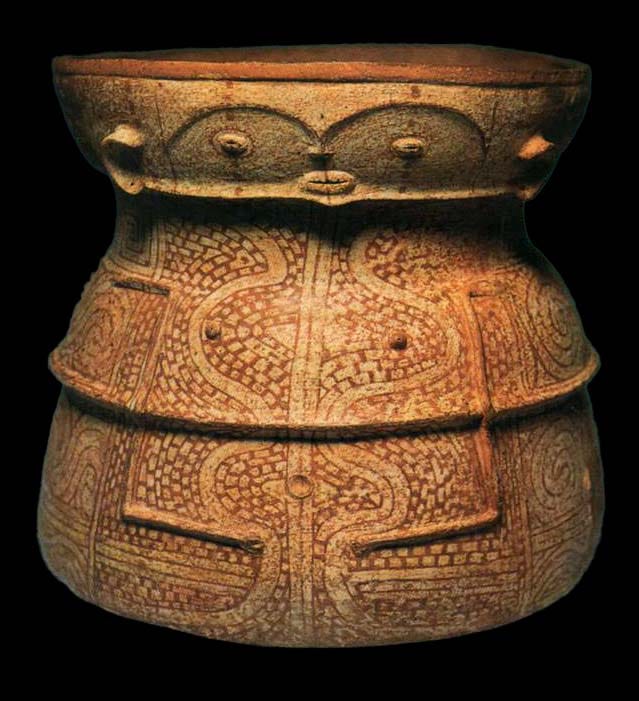
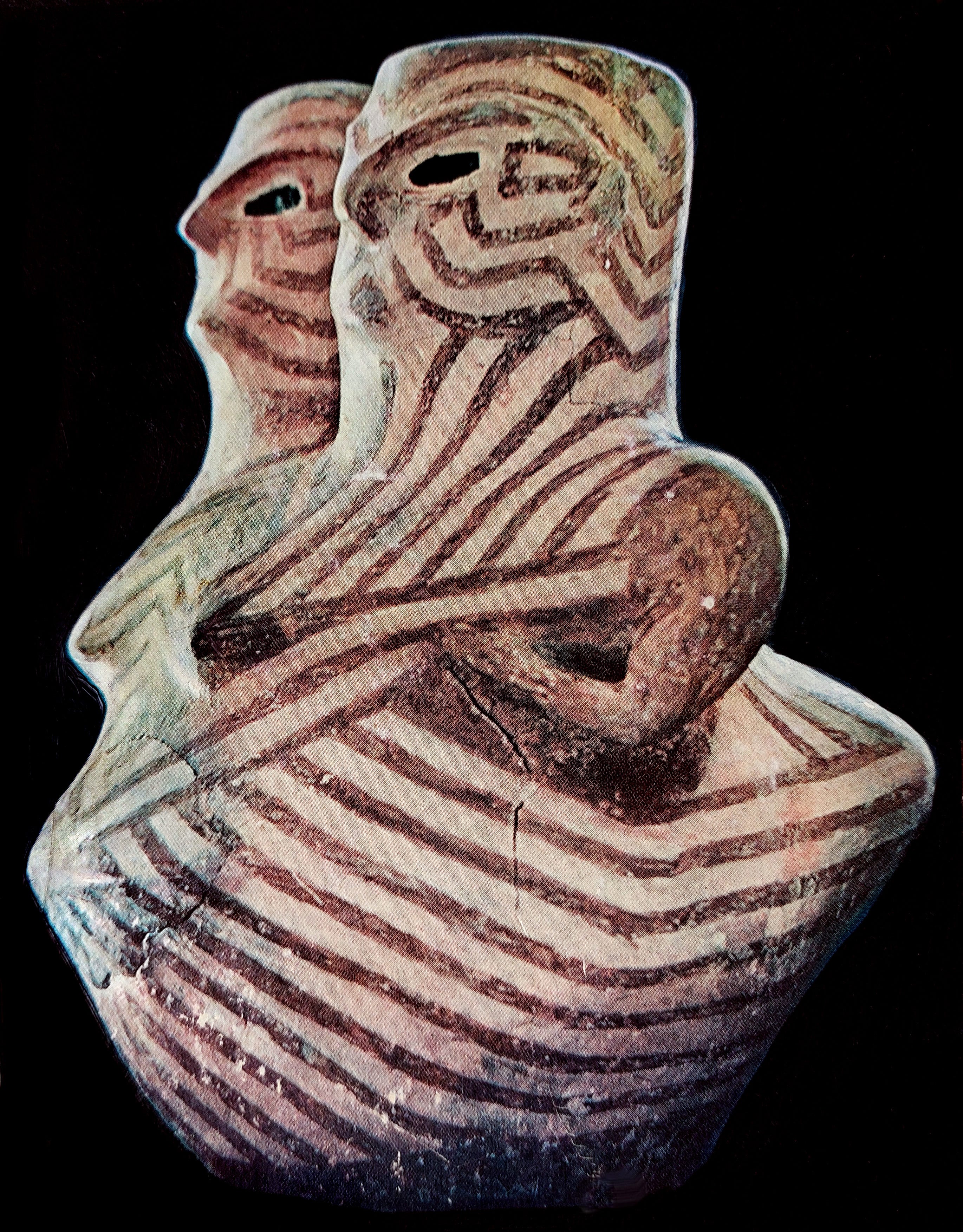
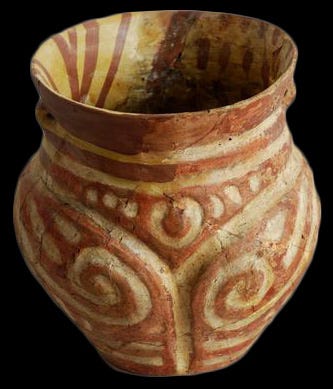
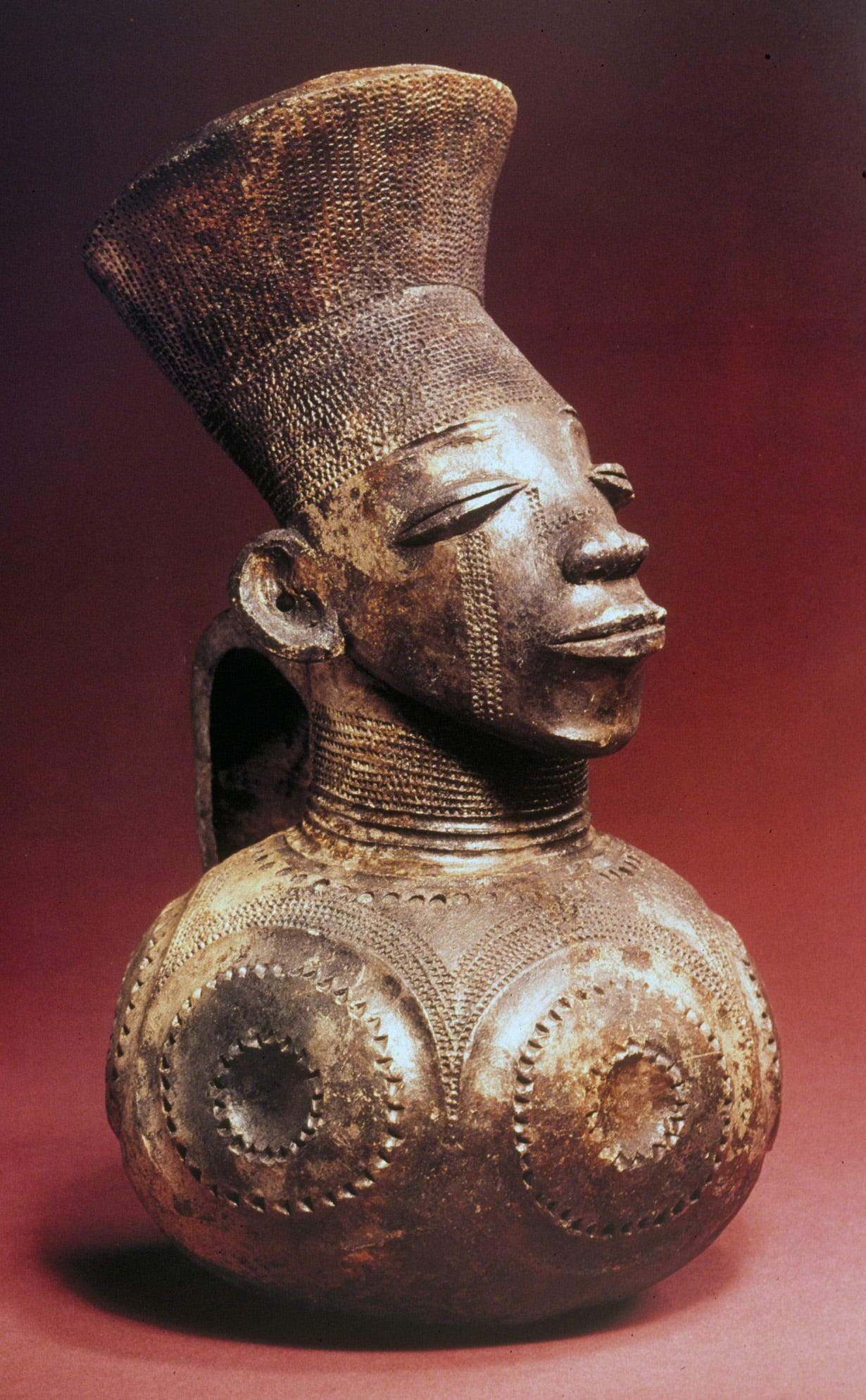
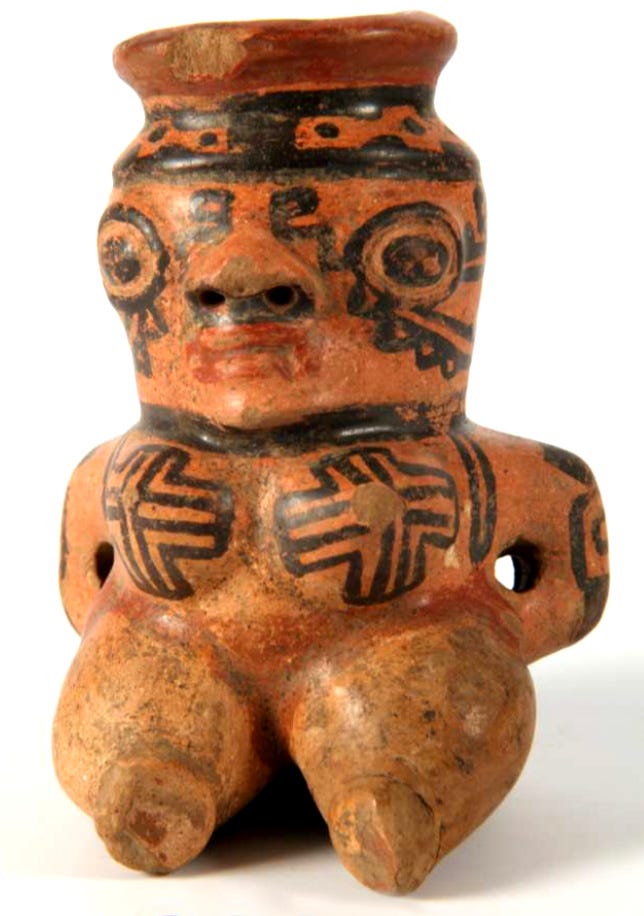
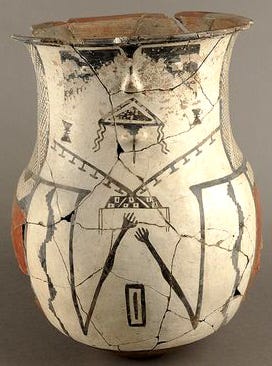
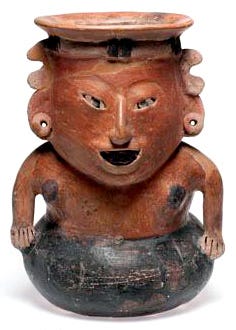
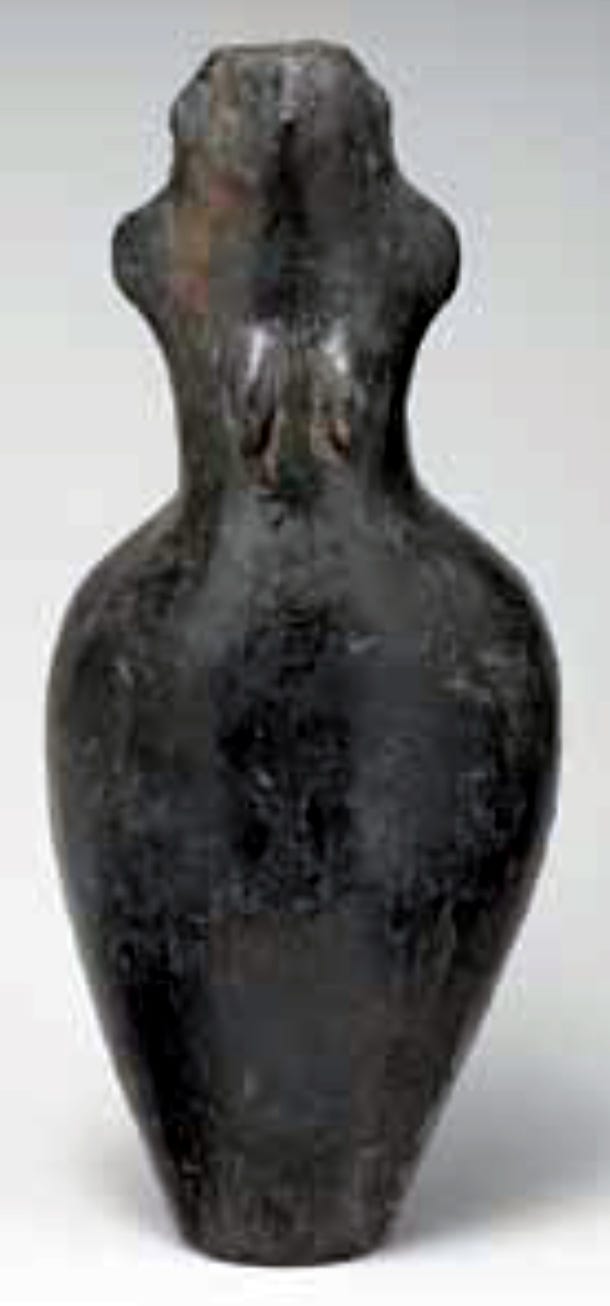
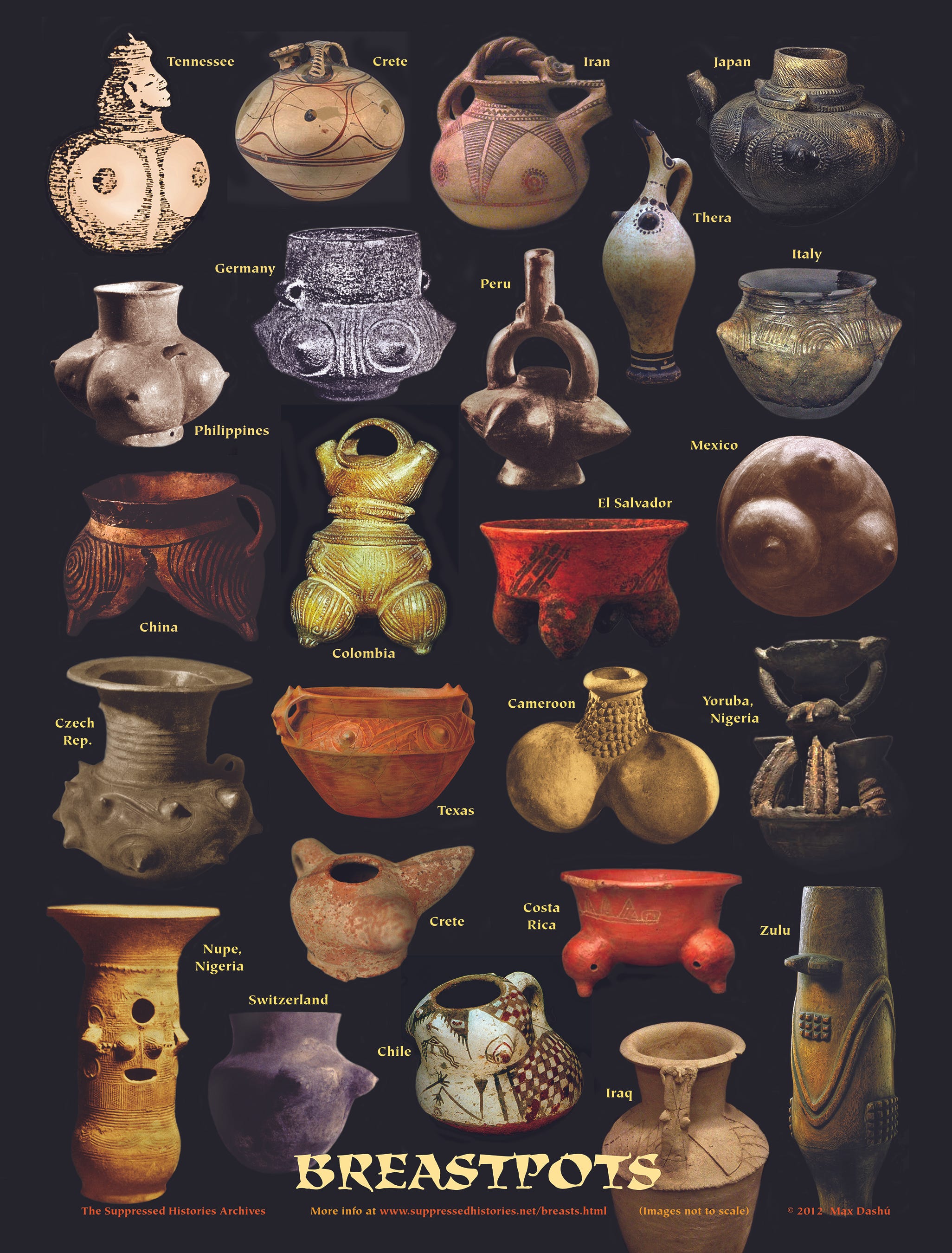
And then the Breastpots, an extremely widespread theme, as you can see below. Most are sculpted into the clay, though some are painted, going around the body of the pots. Others are breast tripods, or are shaped in the form of a woman’s body:
I hope to have the About section, and some of the other page redesigns, ready by July.
All images and videos ©2026 Max Dashu
I just stumbled on your work and am so grateful! In Korea there was a rediscovery of a very early creatrix goddess Mago ~ a statue of which was thrown out of a Buddhist temple and rediscovered there. I can send you some info so this may be included in your incredible map. Similiar to the Wu in China, in Korea shamans (called manshin ~ 10,000 spirits ~ or more derogatory term mudang) were women
Your work is inspiring and I continue to refer women to you wherever possible.
I'm hoping to start a women's esoteric group this year where I am. We'll see how it goes but I would love to schedule a virtual talk at some point. Will email about it once I get approval from the shop owners (5 women, including a lesbian couple).