Matricultures
More videos on women's cultural heritages

Happy Mothers’ Day. I’m sharing some images and videos I’ve done over the past 5 years on Mother Law societies (under a variety of names), and what I call Mother-Tech: the many things women invented and crafted and cultivated, cultures, over millennia. These are not things that get featured in most histories, art books, magazines, movies, or other media. Which means that our view of women’s achievements, actions, presence in history and culture has been skewed, shaped in ways that make our presence invisible. Gives the impression that it was of no consequence, anyway. But when you see these creations, it cannot be more apparent that big things have been left out. Things that bear witness to cultures which held women to be tremendously consequential in societies that most of us know nothing about, have never heard of, or seen their art, their monuments, or ceremonies.
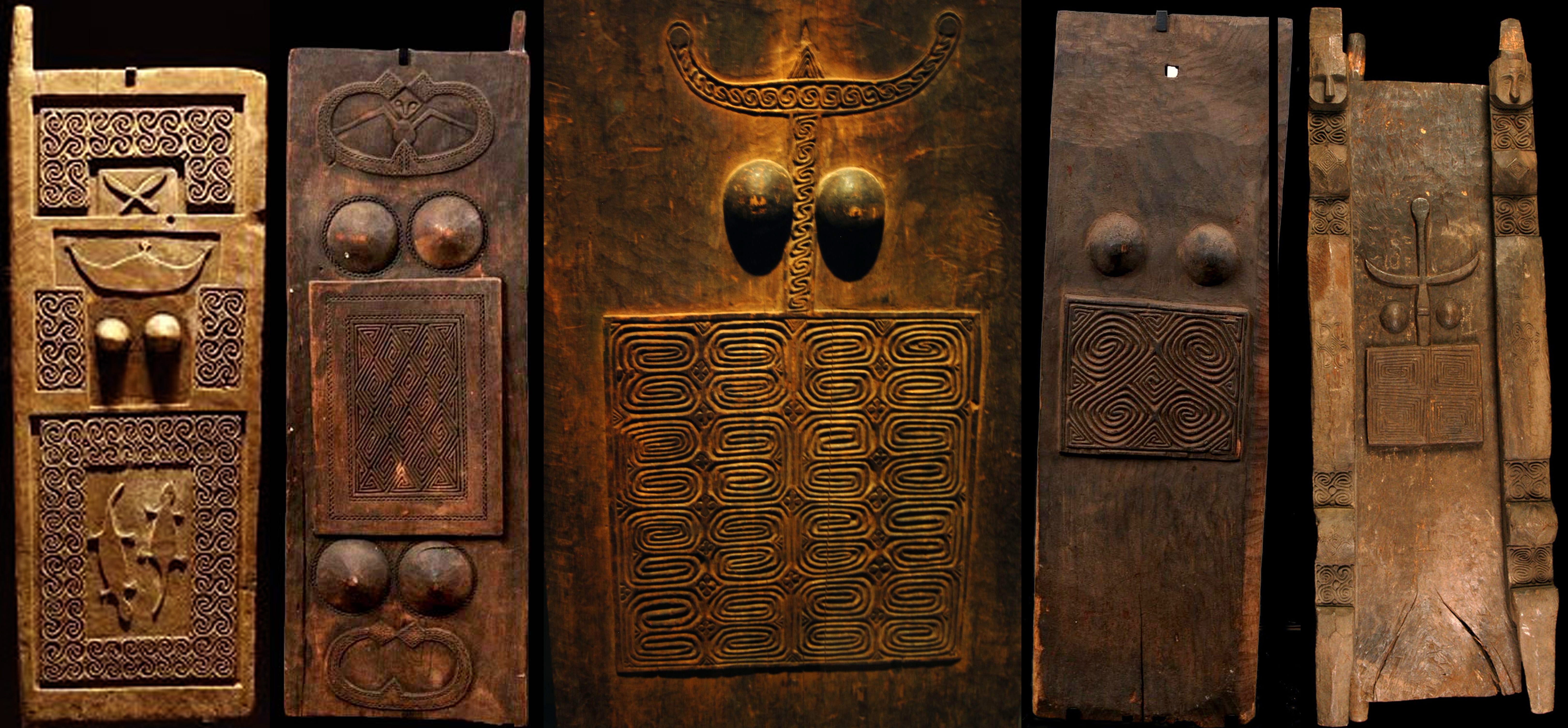
Breasted doors of houses and granaries in Timor (east of Sumba, north of W. Australia
One of those-barely mentioned, not-taught subjects, that makes some professors squirm in their seats, are the Mother Law societies:
This excerpt from Matricultures International is the intro to a longer video that surveys matrilineal/matrilocal societies. It looks at their constellations of cultural patterns: egalitarian and communitarian values, social motherhood (shared responsibility for caregiving!), non-aggression, and valuing the life-support matrix, with reverence for Water, the Earth, Nature.
I discuss various words—matrilineal, matrilocal, matriarchal—that have been proposed to describe these cultures, and turn to significant Indigenous namings: Mother Law (Haudenosaunee), and Adat Ibu, among the Minangkabau in Sumatra, has the same meaning. Or you find matrilineal clans named as Marumakatayam ("sisters' children") in Kerala and Tamilnadu), Susu ("milk bond") in Dobu, or Itabapicilli ("those who suckled together") in Chickasaw (whose country spanned parts of what is now Tennessee, Alabama, Mississippi, and Kentucky).
The Suppressed Histories Archives is moving to make its resources on global women’s history and cultures easier to explore (we’re tagging content and creating navigation pages). I’ll be loading in links to ten thousand photo essays on a large range of topics. The MotherTech video below is part Two of four, and shows some of the first banners made for navigation pages on more than 100 topics, so far. There’ll be more.
There is abundant knowledge, countless cultural treasures to be recovered for women to see, to know, and to recognize. To be moved and changed by that knowing, seeing that these things that have been withheld from our view exist. Which were created out of cultural values manifestly different than those that male religious authorities, and scientists too, insisted were universal, inevitable, and ordained.
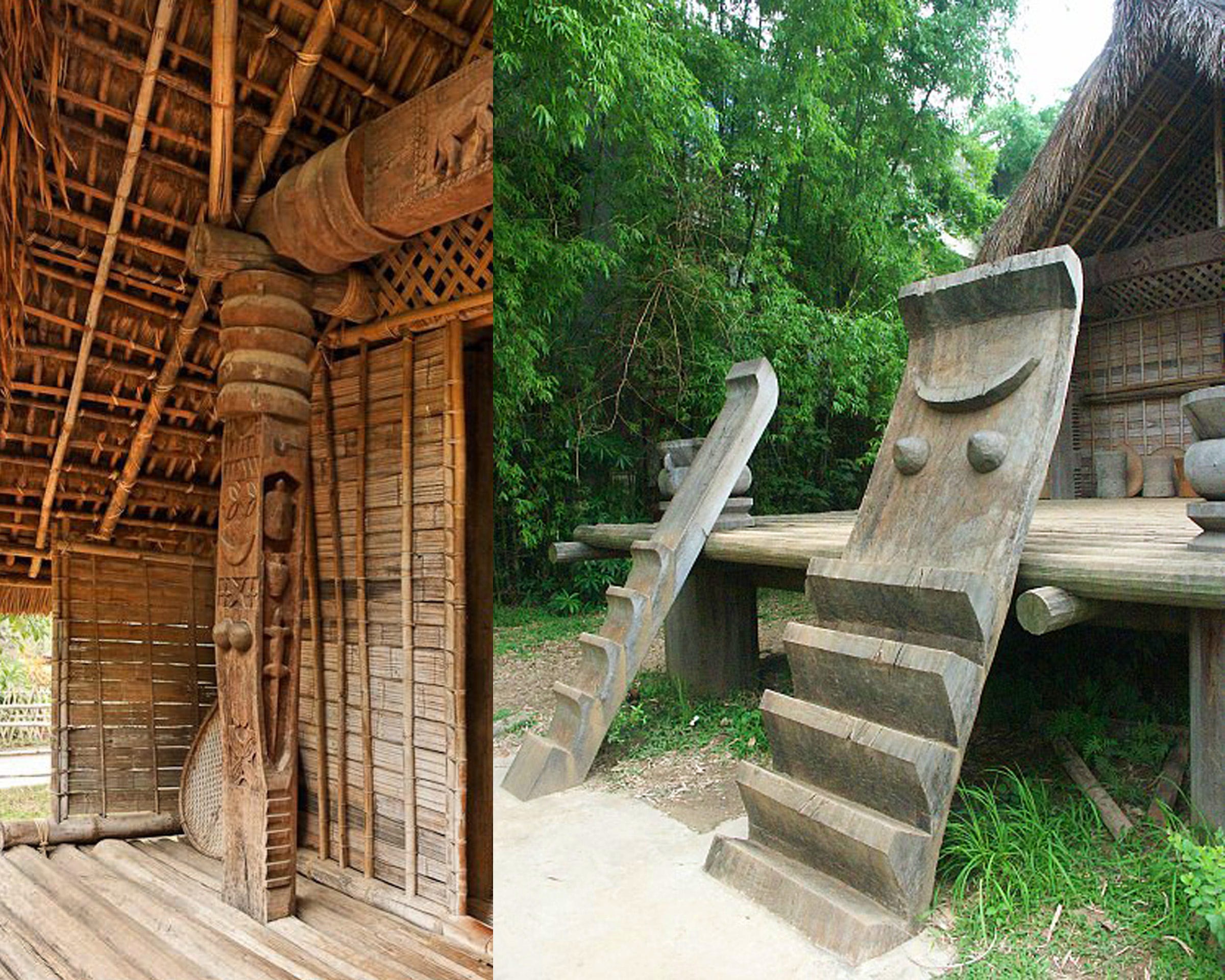
Pillar of ancestral mother in an Edé longhouse, one of several matrilineal / matrilocal peoples in the highlands of Vietnam. At right, entry ladders representing clan mothers and brothers.
Here’s a short commentary on Women's Authority and Pattern Recognition:
These videos take a global view, comparing patterns over continents and countries. Another set of videos looks at historical transformations in one region, over time, again putting women at the center. (We have much to remediate and rematriate.) These two mega-categories, Patterns and Places, are part of the reconfiguration of the Suppressed Histories Archives site now underway. Under Patterns will be navigation pages with photo essays on female elders; chiefs; drummers; prophets; healers; farmers; builders; foragers; birth; sanctuaries; witches; lesbians; freethinkers; revolutionaries (and many more on patriarchy, conquest, slavery, colonization, and racism). Or you’ll be able to navigate the site through Places, going by continent, country, region, or ethnicity.
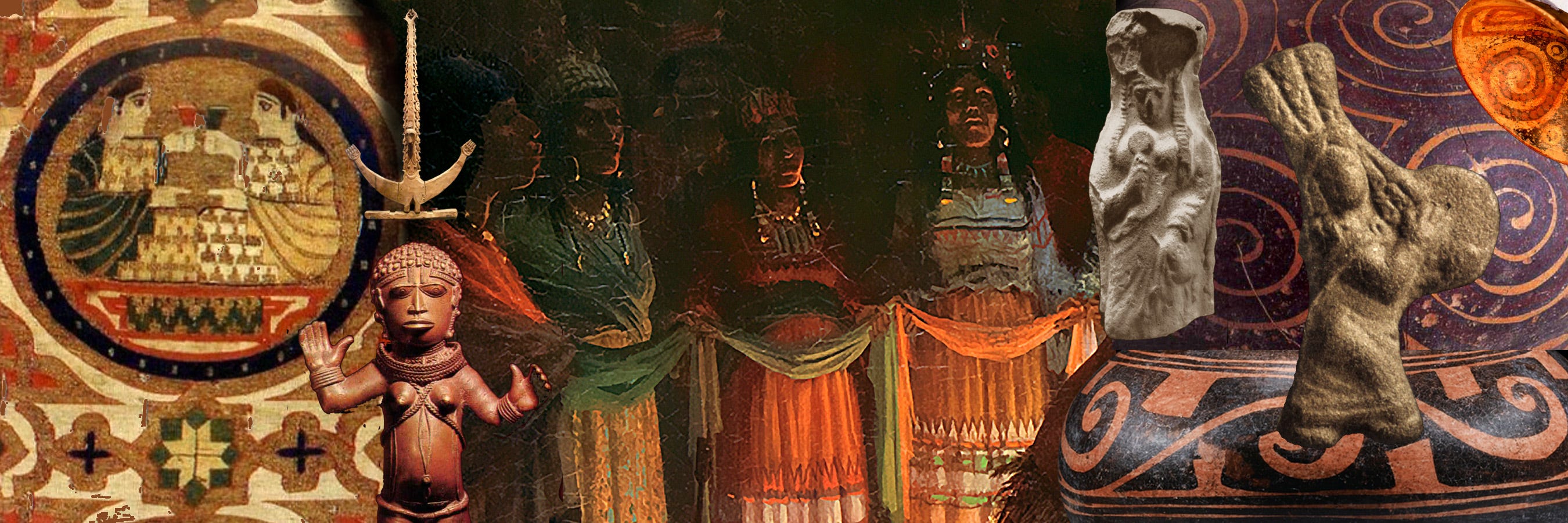
Here’s an example of one of the regional videos, on predynastic Kemetic icongraphy. Because Egyptian history is so long and rich, I’ve already made three videos (this one, another on Kemetic Deasophy, and one on Egyptian Goddesses in Late Antiquity), with more on women’s history in Egypt to come in future.
Next, you can taste an early draft video on the magnificent ceramic tradition of the Cucuteni-Tripillye culture (Romania, Moldova, Ukraine, about 4500-3000 bce). It is a classical tradition in its own right, but that term never seems to be applied to non-state classless societies. This one flourished for nearly two thousand years.
You can see a lot more open access videos on Max Dashu youtube channel. (I’ll post more of them here in future.) Titles include Ancient Sahara; Women in Greek Mythography; Kush: Ancient Sudan; Racism, History and Lies; Persecutory Cultures; and some excerpts from Woman Shaman: the Ancients.
Other videos, like the full predynastic Kemet Before Pharoahs video, are on Suppressed Histories Portal, my stream-on-demand channel. That’s where my current 2025 course Womanity is hosted, along with some thirty self-paced courses. Among the titles are Female Rebels and Mavericks; Ancient Iran; Snake Women; Witches and Pagans; and Rebel Shamans: Women Confront Empire.
Fight fascism and all forms of authoritarian domination.
You are AMAZING!! thank you for your work and for sharing so generously!
I look forward to learning so much about our foremothers. Thanks for your constant research and sharing of it.