Breastpots poster
Ceremonial pots shaped as women’s breasts, honoring the Lifegivers

These ceremonial vessels are very widespread, as you can see from the labels, yet are rarely published. You’d never know that this many cultures revered their ancestral women this way; the blizzard of male-dominated religion, culture, media passes them over, consistently. But here they are, spanning millennia. They’ve been sequestrated to the point that few but archaeological specialists know about them. There are several kinds: breasts painted or sculpture all around the sides of the pots; breasted tripods (or often quardrupods in Central America); or a single figure whose body is the pot. Read on for identifications of each breastpot, followed by a photo gallery of more.
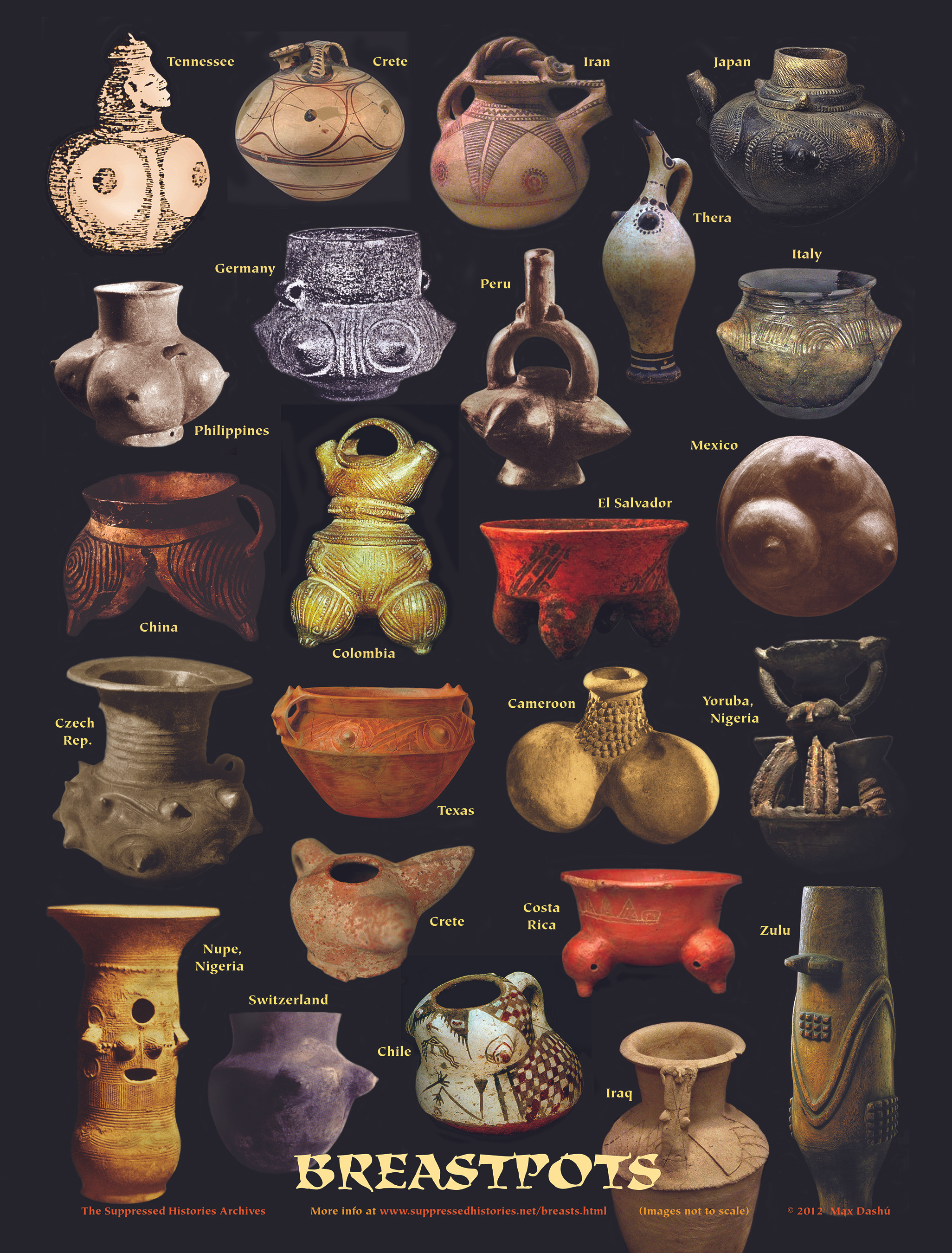
Left to right, then down:
Tennessee, Crete, Iran, Japan; Philippines, Germany, Peru, Thera, Italy;
China, Colombia, El Salvador, Mexico; Czechia, Texas, Cameroon, Yoruba (Nigeria);
Nupe (Nigeria), Switzerland, Crete, Chile, Costa Rica, Iraq, Zulu (South Africa).
Order here. 18 x 24 semigloss on heavy paper. These posters are half price due to an error (two pots appear within black rectangles slightly darker than the background). Thus the Fates have decreed that the Breastpots poster must be a total bargain—at only $10, plus shipping. ($5 in US. Internationally it varies a lot: $17 to UK; $21 to AUS; $18 to IE; $25 to GR; or message me.)
More information on the images, with broad estimates on dating.
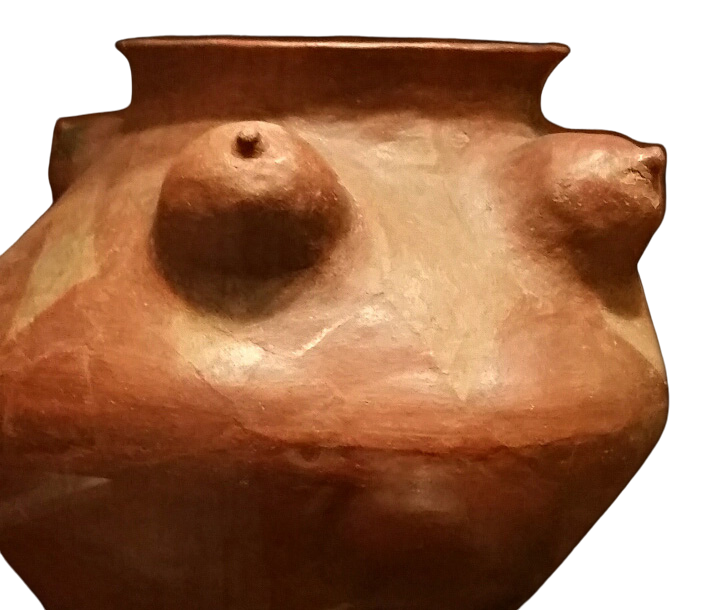
Tennessee: These pots with breasts going around the circumference are found in many countries. Another Tennessee pot has breasts only, no head. No location given and no photo available, circa 1000-1500 CE.
Crete: Probably neolithic, but possibly from the Temple period. This style is also found in the Tripilye-Cucuteni culture in Ukraine/Romania.
Iran: Another smooth painted vessel with breasts facing out along circumference, this one from western Iran. Neolithic, or early bronze age.
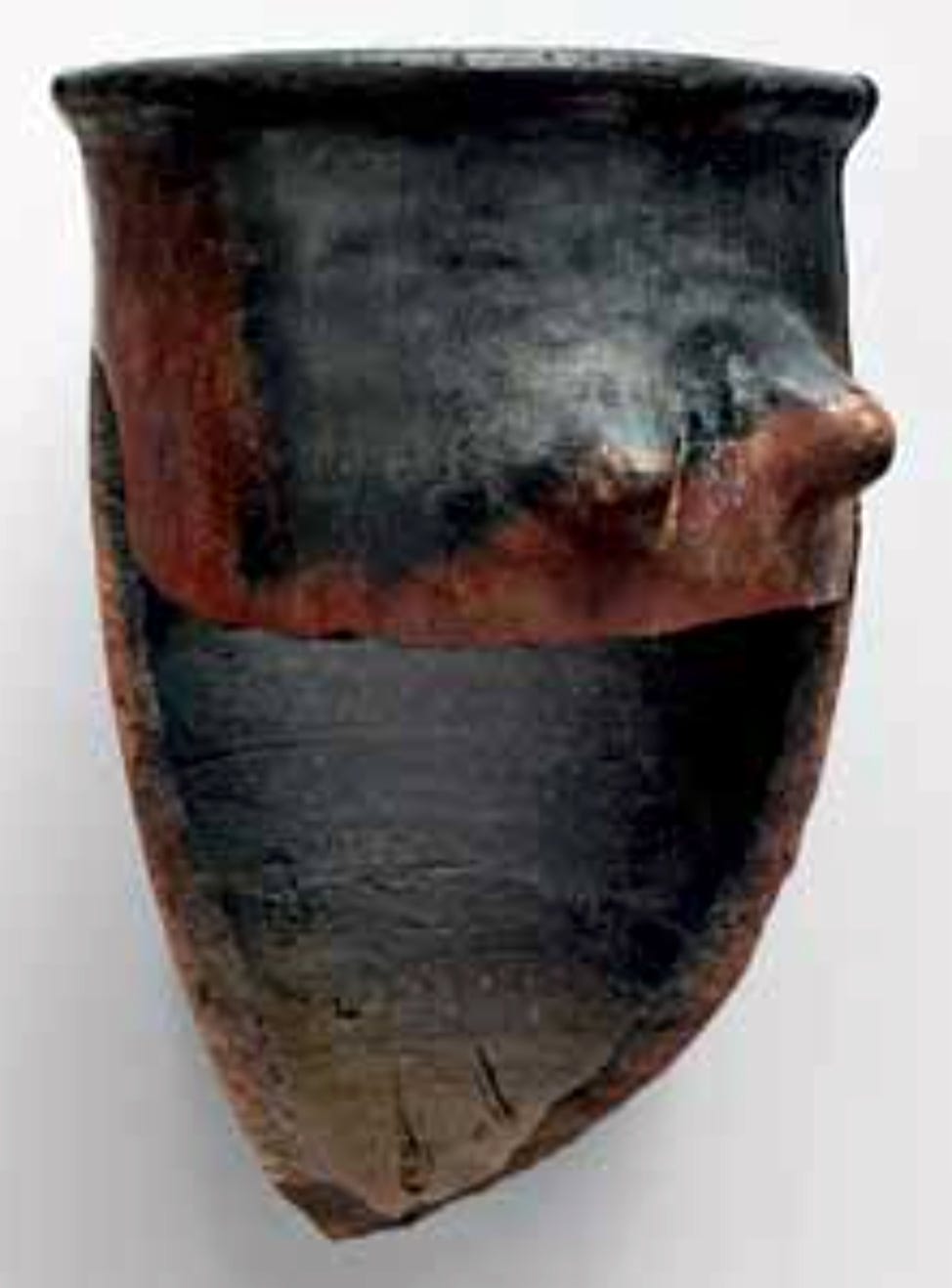
Japan: This one closely resembles the Iranian pot, but the patterns are incised rather than painted. Jomon period, circa 3000-1500 BCE
Philippines: Funerary offering from a cave in Mindoro, no date given.
Germany: Numerous examples of breastpots exist from Lausitz/Lusatia, in eastern Germany. Circa 1500 BCE.
Peru: A great variation in kinds of breastpots is seen in Peru: the fourfold outward-facing one shown; breast tripods; and multiple breasts all over the vessel surface (at Tembladera). No date or location given.
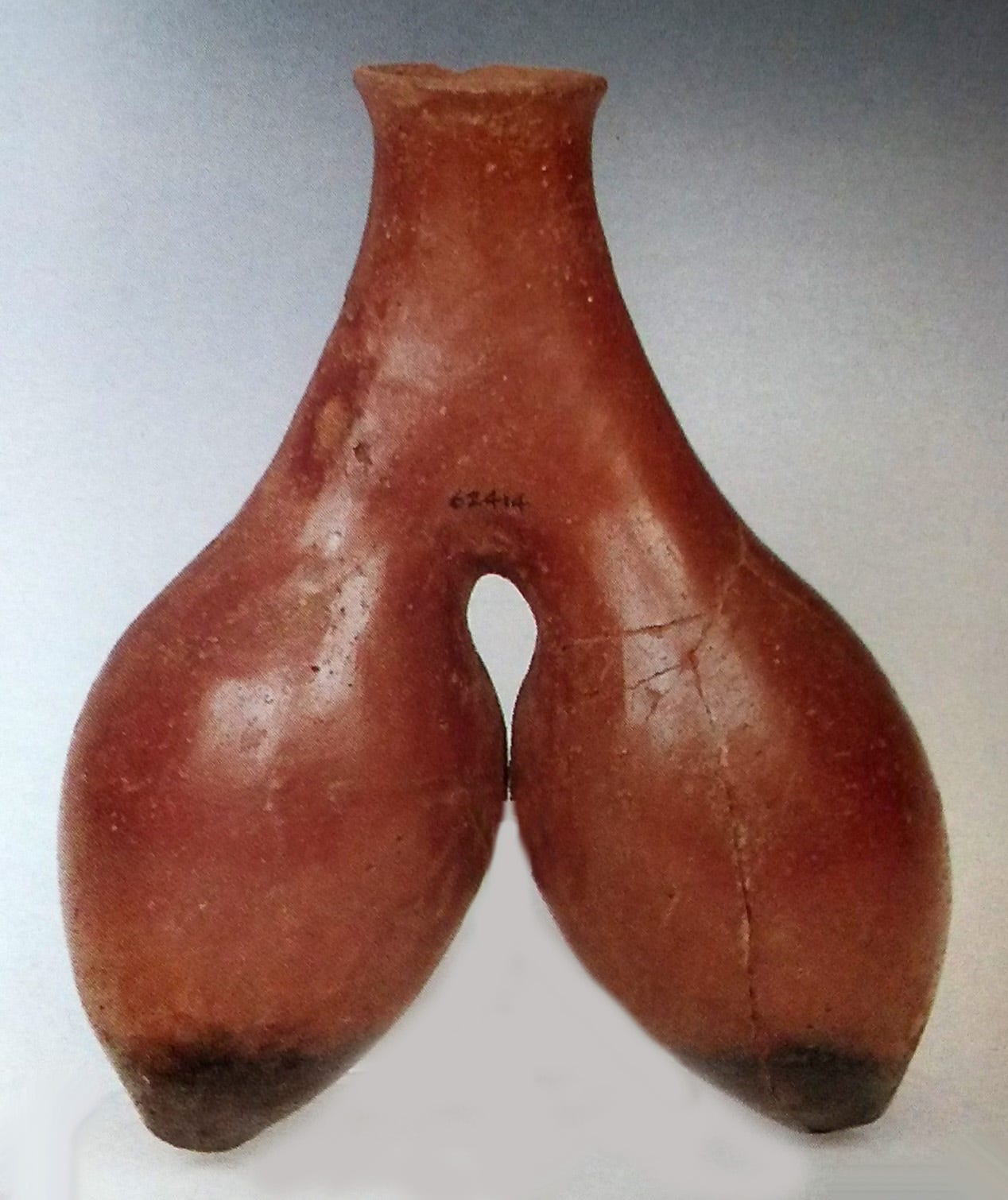
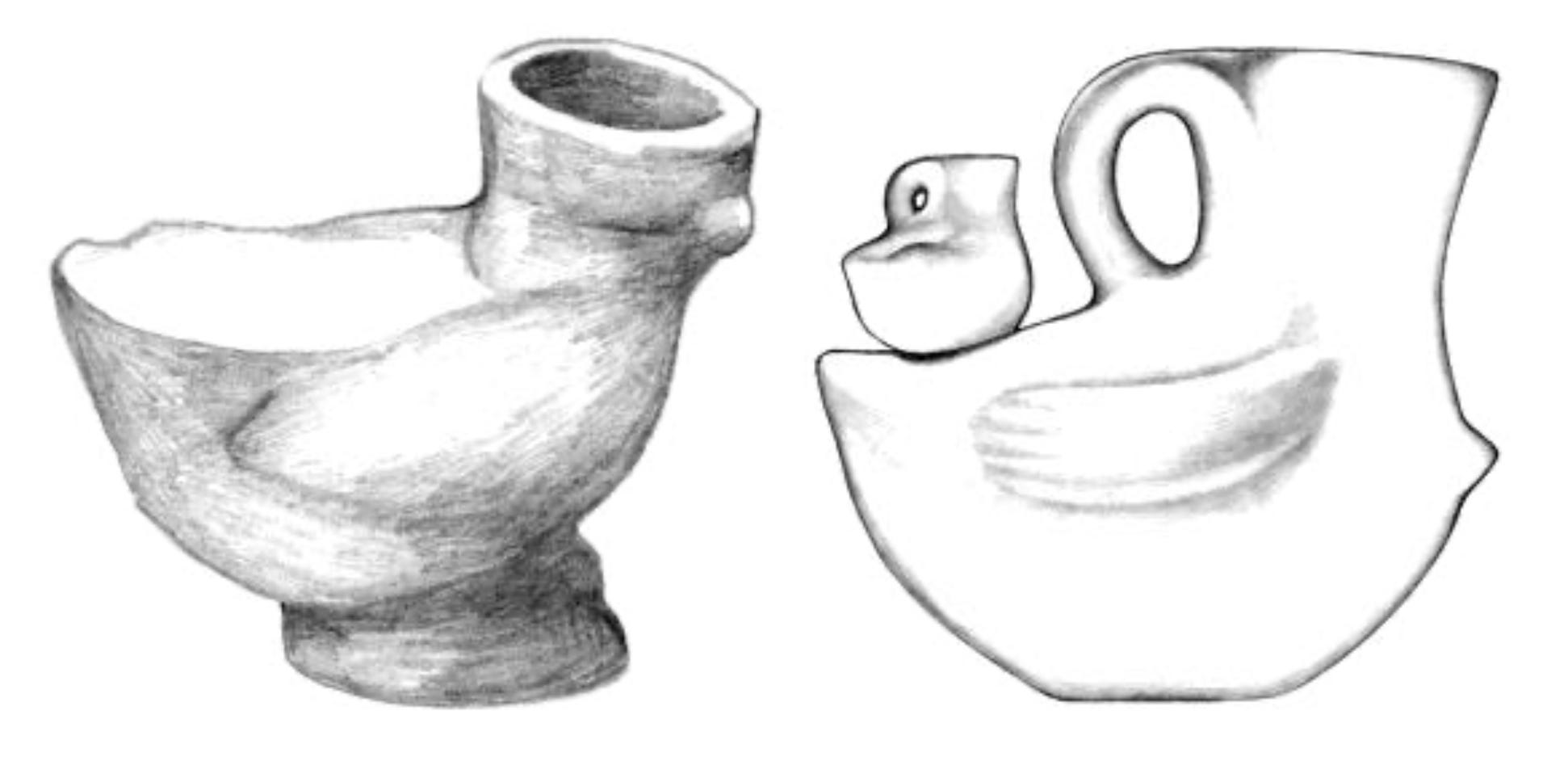
Thera: This is the long-necked breasted bird vessel wedged between 2 rows, its beak a pouring spout. Several examples of this style exist, some fatter, in the Aegean islands, circa 1600 BCE.
Italy: Another incised-pattern four-breasted pot from the Terramare / Terramara culture, Po Valley, northern Italy, 1700-1100 bce
China: From Si Wa, Gansu, circa 3000 bce. One of many breast tripods from late Yangshao period, which were prototypes for the later bronze offering vessels called Li (the elongated legs no longer resemble nipples).
Colombia: Another breast tripod, with incised spirals and dots. Pre-conquest, no date or location given. (These pots are not considered important enough to identify?)
El Salvador: Red-glazed and patterned breast-legged vessel. In Guatemala too, they tend not to be tripods, as with a four legged pot at Kaminaljuyú. No date or site given.
Mexico: Breast tripods are found in western Mexico, some with long plump breasts and others flatter and wider, like this one from Chupícuaro, circa 500 bce to 100 ce.
Czech Republic: A vessel adorned with nipples connected by spiral patterns, from the Otomanská culture. Neolithic, pre-3000 bce.
Texas: Caddoan pot in a very similar style, a good example of how totally unrelated cultures in different time periods come up with the same ideas. Pre-conquest, sometime after 800 CE.
Cameroon: Inbulom, or “soul pot.” Modern; ethnic group and location not given.
Yoruba: Breasted vessels are common in Nigeria; this one is an oil-lamp. Other Yoruba vessels are in the form of women with prominent breasts, sometimes nursing a child; others contain essence: sacred river water and pebbles. 20th century.
Nupe, northern Nigeria: Women placed full waterpots on these breasted stands. Not pots exactly, rather water dispensers, with the same symbolism. 20th century.
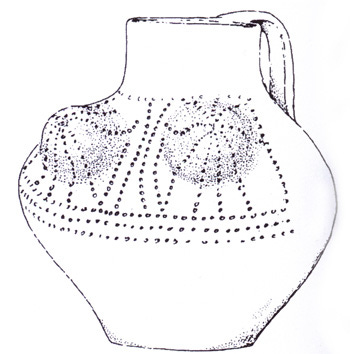
Switzerland: Neolithic villagers made these pots, some of them incised with dotted patterns of flowing milk (see another example below).
Crete: Another kind of breast-vessel belongs to an ancient Aegean style of very pointed breasts, often seen on female figurines or effigy vessels whose breasts are pierced to allow libations to flow through. Circa 2nd millennium bce.
Chile: The breasted bird pot (see Thera, above) reappears in the Diaguitas culture, spanning northern Chile/Argentina. Mapuche descendants have kept this theme going in metawe vessels on the altars of present-day machi (medicine women). This one is white-painted with red and black, 700-1500 CE. (See below for more.)
Costa Rica: A breast-tripod from Central America, no date or location given. They are found over a vast area, from Peru up to Mexico.
Iraq: One of many funerary water pitchers with breasted female handles from ancient Kish. The burial mound is called “early dynastic” and “bronze age”, so 3000-2500 bce.
Zulu: A carved wooden milk pail from South Africa, 20th century.
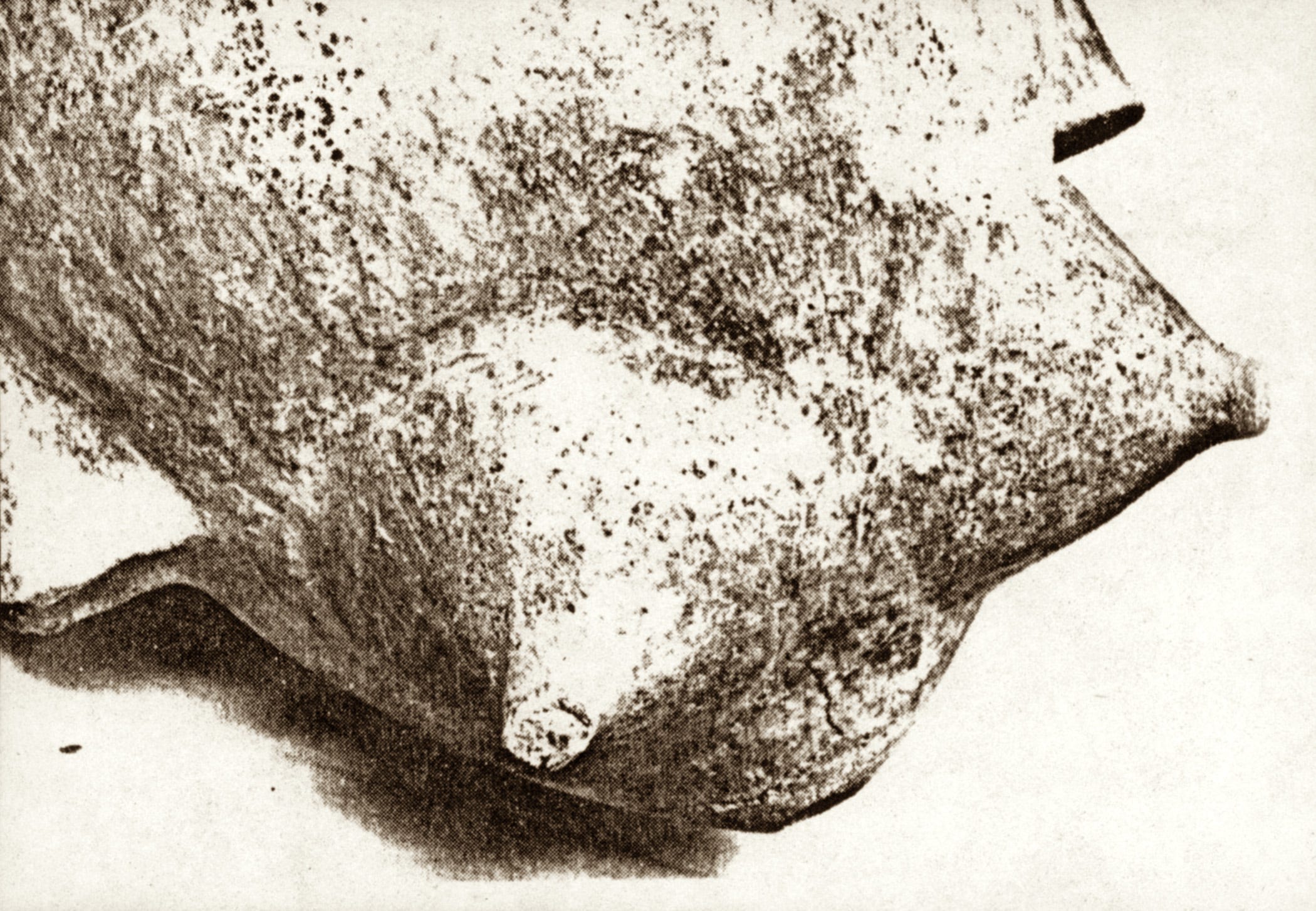
Some more examples:
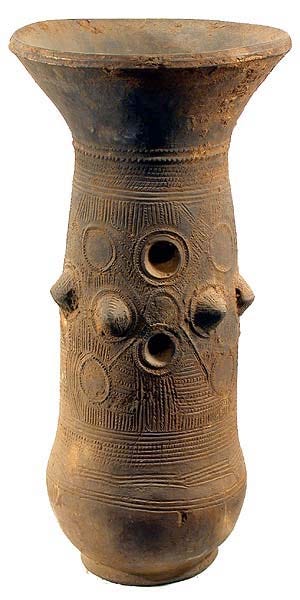
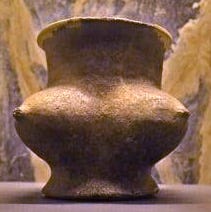
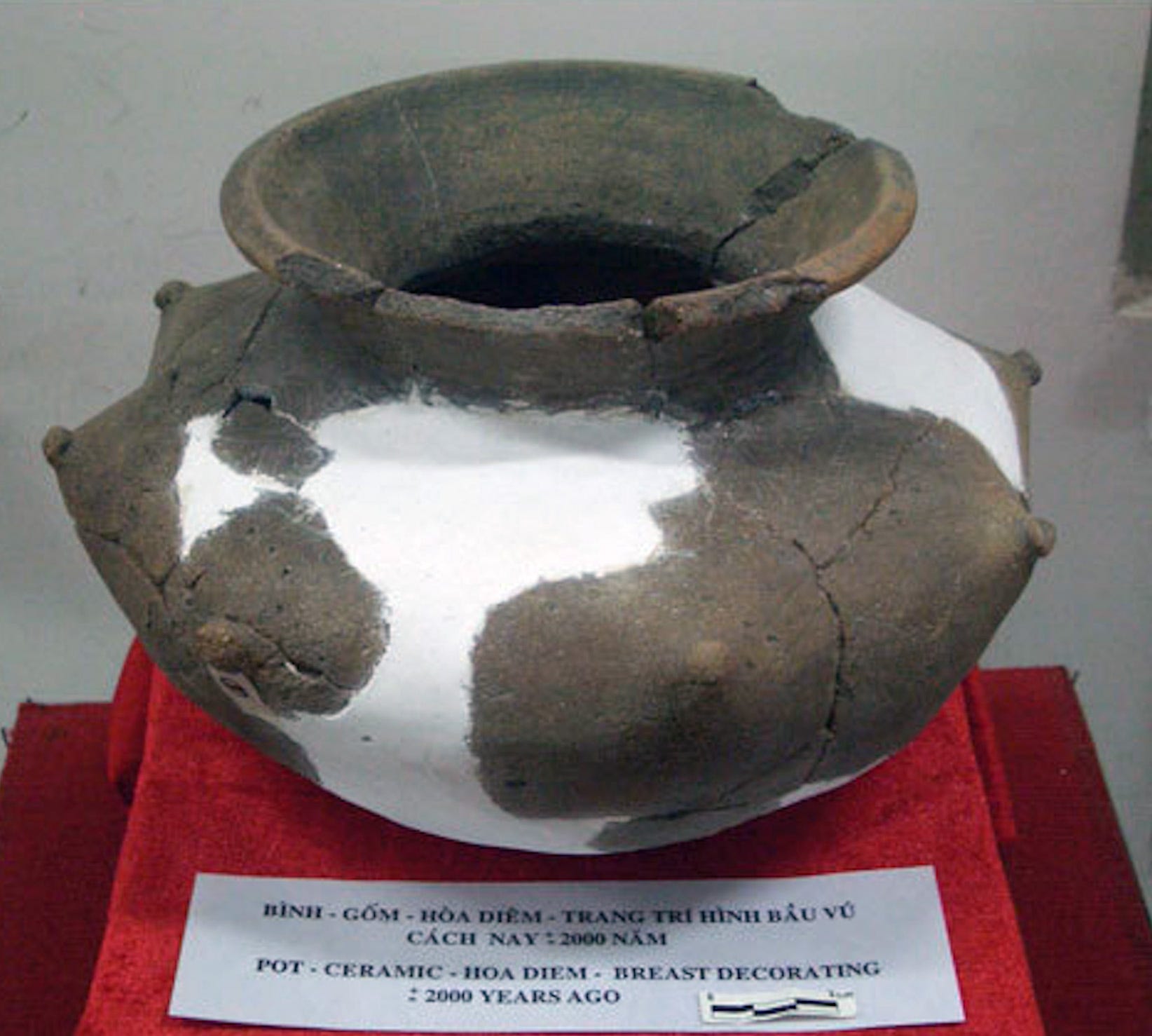
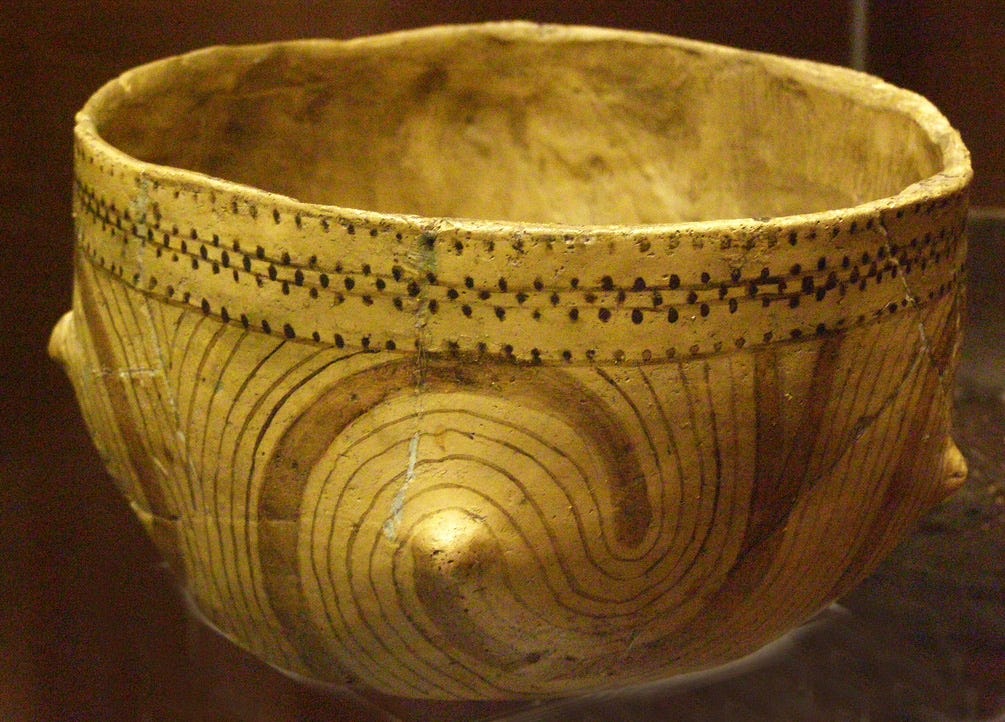
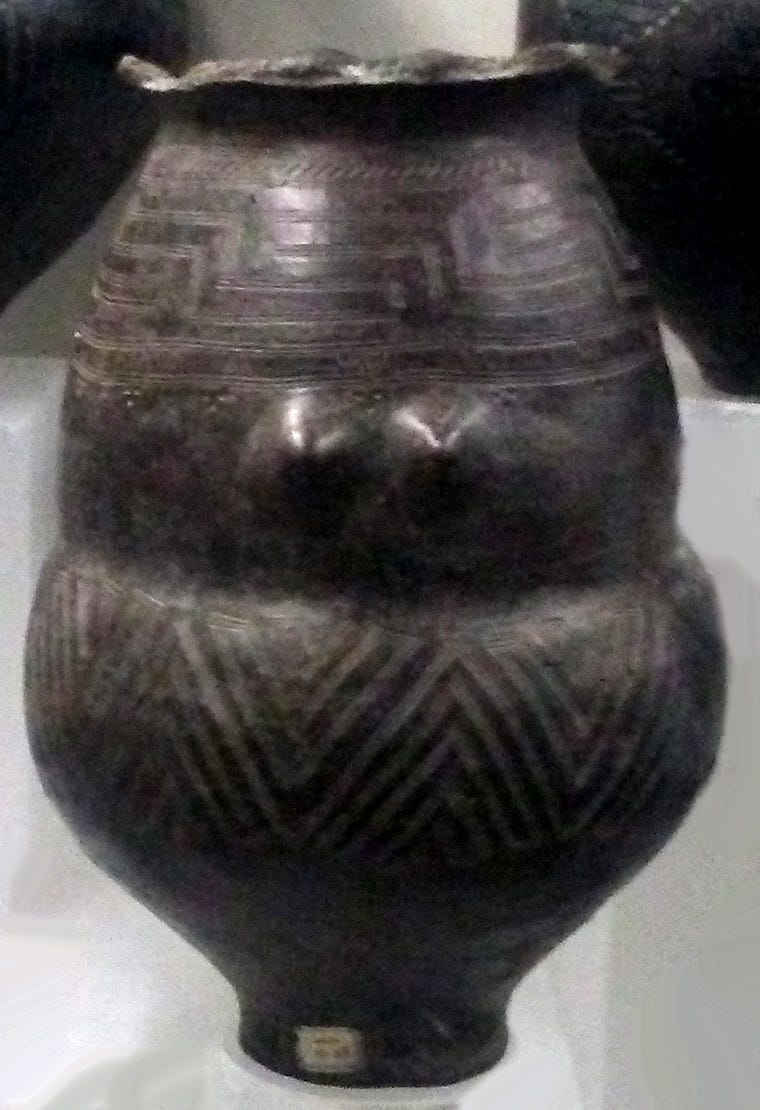
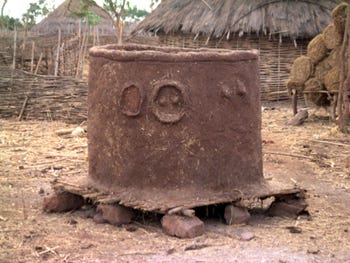
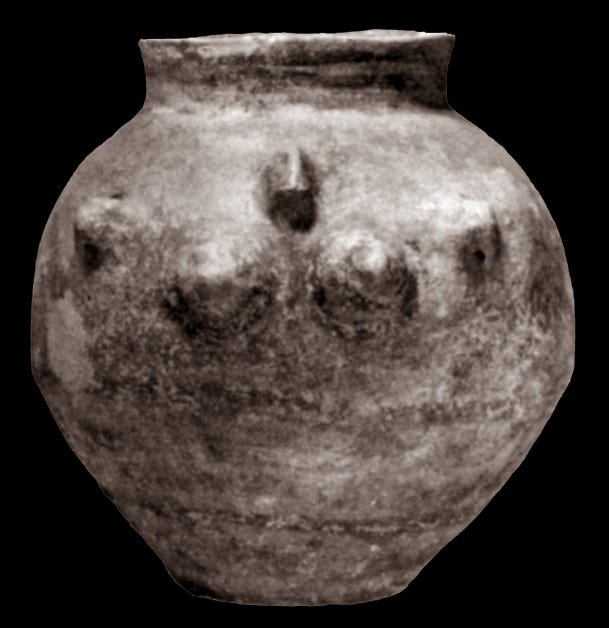
Eventually I’ll have the Breasts! video up on my course / stream on demand platform . It’s a much broader view of breast iconography in murals and wall reliefs, doors, pillars, funerary urns; and in figurines, votive plaques, megaliths, regalia (such as the pectorals of beaten gold in Colombia), wooden drums, and sculptured fountains. It’s an amazing and fun exploration of an overlooked female iconography (which is not directed at the male gaze, but toward more essential social affirmations).